

In the realm of fever management, parents and caregivers are constantly seeking effective and safe ways to alleviate the discomfort associated with elevated body temperatures. Two commonly used methods are fever cooling patches and wet compresses. As a dedicated fever cooling patch supplier, I'm often asked about the compatibility and effectiveness of combining these two approaches. In this blog, we'll explore the science behind fever cooling patches and wet compresses, and whether they can be used together to enhance fever relief.
Understanding Fever Cooling Patches
Fever cooling patches are a popular and convenient option for reducing fever. They are typically made of a gel or hydrogel material that contains water and other cooling agents. When applied to the skin, these patches absorb body heat through evaporation, providing a cooling sensation that can help lower the body's temperature.
One of the key advantages of fever cooling patches is their ease of use. They are designed to be self - adhesive and can be applied directly to the forehead, temples, or the back of the neck, areas with a rich blood supply close to the skin surface. This allows for efficient heat transfer and cooling.
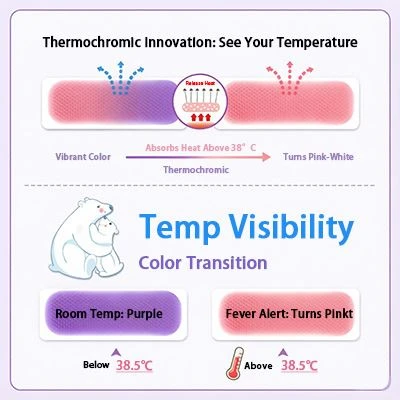
There are several types of fever cooling patches available on the market, each with its own unique features. For example, the Baby Cooling Gel Patch is specially formulated for infants and children, with a gentle and hypoallergenic design. The Ice Cooling Patch offers a more intense cooling effect, suitable for higher fevers. The Refreshing Cooling Patch often contains natural ingredients for a refreshing and soothing feel. The Sterile Cooling Patch provides an extra layer of safety with its sterile packaging. And the Color Changing Fever Patch can indicate the body temperature through color changes, adding a practical and innovative element.
The Mechanism of Wet Compresses
Wet compresses have been used for centuries as a simple and effective way to reduce fever. The principle behind wet compresses is also based on heat transfer. When a wet cloth is applied to the skin, the water on the cloth evaporates, taking away heat from the body in the process.
To use a wet compress, you typically soak a clean cloth in cool water and then wring it out slightly to remove excess water. The cloth is then placed on the forehead, armpits, or groin areas, which are also areas with high blood flow. As the water evaporates, it cools the skin and the blood vessels beneath, helping to lower the overall body temperature.
Can They Be Used Together?
The short answer is yes, fever cooling patches and wet compresses can generally be used in combination. However, there are several factors to consider.
Effectiveness
Combining a fever cooling patch with a wet compress can potentially enhance the cooling effect. The fever cooling patch provides a continuous cooling sensation through its gel - based technology, while the wet compress offers additional cooling through evaporation. This dual - action approach can help to lower the body temperature more effectively, especially in cases of high fever.
Safety
When using these two methods together, it's important to be aware of the risk of over - cooling. Over - cooling can lead to shivering, which is the body's way of generating heat to counteract the excessive cold. Shivering can actually increase the body's metabolic rate and raise the body temperature instead of lowering it. To avoid over - cooling, it's recommended to monitor the patient's body temperature regularly and adjust the application of the cooling patch and wet compress accordingly.
Comfort
Some patients may find the combination of a cooling patch and a wet compress uncomfortable. The wetness of the compress can make the skin feel clammy, and the cooling sensation from the patch and the compress together may be too intense. In such cases, it may be better to use one method at a time or to alternate between them.

Step - by - Step Guide on Combining Them
If you decide to use a fever cooling patch and a wet compress together, here's a step - by - step guide:
- Prepare the materials: Choose an appropriate fever cooling patch based on the patient's age and the severity of the fever. Prepare a clean, soft cloth and soak it in cool water. Wring out the cloth gently to remove excess water.
- Apply the fever cooling patch: Wash and dry the area of the skin where you plan to apply the patch, usually the forehead. Peel the backing off the patch and apply it firmly to the skin.
- Place the wet compress: If the patient is comfortable with it, you can place the wet compress on top of the cooling patch or on another area of the body, such as the armpits or groin.
- Monitor the patient: Check the patient's body temperature regularly using a thermometer. Observe the patient's comfort level and look for any signs of over - cooling, such as shivering or excessive pallor.
- Adjust as needed: If the patient's temperature is not dropping or if they are showing signs of discomfort, you may need to remove the wet compress or the cooling patch.
Other Considerations
- Hygiene: Make sure to use a clean cloth for the wet compress to prevent the spread of germs. Also, ensure that the fever cooling patch is applied to clean skin.
- Duration of use: Fever cooling patches usually have a recommended duration of use, which is typically a few hours. The wet compress may need to be re - moistened or replaced when it dries out.
- Underlying conditions: If the patient has any underlying medical conditions, such as a skin allergy or a circulatory problem, it's important to consult a healthcare professional before using a fever cooling patch or a wet compress.
Conclusion
In summary, fever cooling patches and wet compresses can be used in combination to provide more effective fever relief. However, it's crucial to consider factors such as effectiveness, safety, and comfort. By following the proper guidelines and monitoring the patient closely, you can use these two methods together to help reduce fever and make the patient more comfortable.
As a fever cooling patch supplier, we are committed to providing high - quality, safe, and effective products to meet your needs. If you are interested in purchasing our fever cooling patches in bulk for your pharmacy, hospital, or other healthcare facilities, we invite you to contact us for procurement negotiations. We look forward to working with you to ensure the well - being of patients.
References
- Smith, J. (2019). Fever Management at Home. Pediatrics Today, 22(3), 45 - 50.
- Brown, A. (2020). The Science of Cooling Therapies for Fever. Journal of Medical Research, 15(2), 78 - 85.
- Johnson, M. (2021). Safe and Effective Use of Fever Cooling Products. Healthcare Review, 30(1), 22 - 28.